Introduction
Cloud design patterns are reusable solutions for common problems in cloud architectures. These patterns address scalability, reliability, security, and performance challenges in distributed systems.
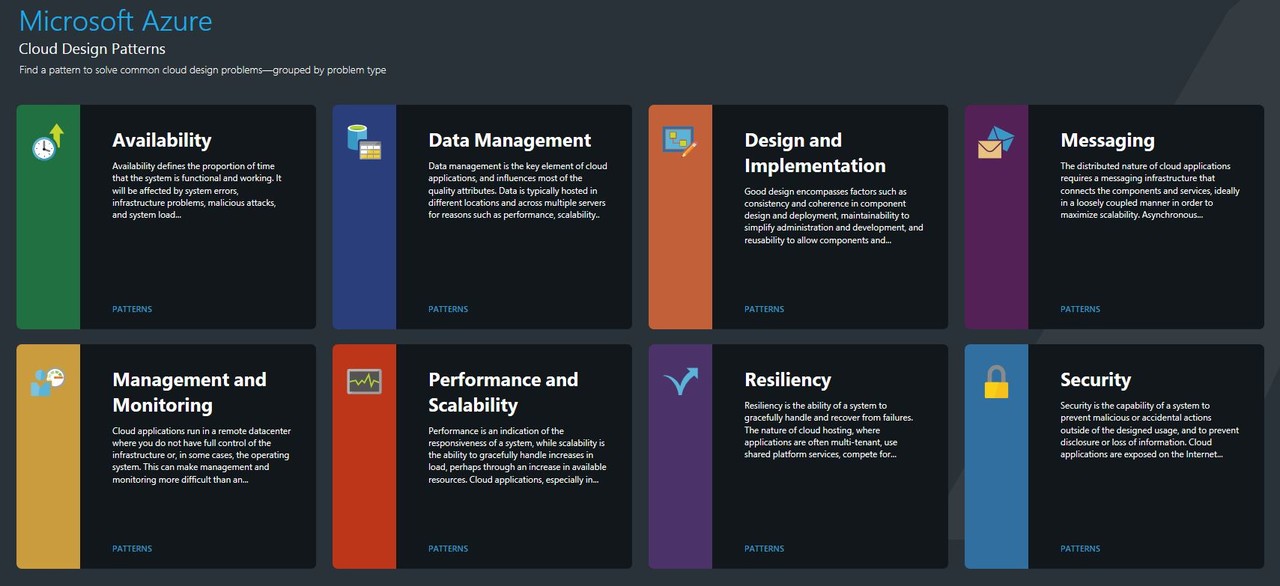
They provide best practices for designing and deploying cloud applications, including data management, messaging, resiliency, and deployment. Common examples include:
- Circuit Breaker: Prevents cascading failures by temporarily breaking connections after repeated errors.
- CQRS (Command Query Responsibility Segregation): Separates read and write operations to improve performance.
- Sidecar Pattern: Splits auxiliary application components into separate processes or containers for more flexibility.
🔹 Availability
Availability is the percentage of time a system operates as expected, often called uptime. It can be affected by hardware or software failures, infrastructure issues, cyberattacks, or excessive load.
Cloud providers typically define service level agreements (SLA) that specify guaranteed uptime. For example, a company might promise 99.99% availability.
🔹 Example: A system that guarantees 99.99% uptime can only be down for 52 minutes per year.
🔹 Data Management
Data management is a key factor in cloud applications and influences most quality attributes. Data is often stored in multiple locations to improve performance, scale, or availability. This introduces challenges such as:
- Maintaining data consistency when synchronizing across servers.
- Securing data during storage, transit, and access.
- Scalability to handle growth demands.
🔹 Example: Banking systems must ensure transactions remain consistent across data centers to avoid incorrect account balances.
🔹 Design and Implementation
Good design helps systems stay maintainable, consistent, and reusable across multiple scenarios. Decisions made during design and implementation directly affect cost and overall cloud application quality.
Key design principles:
- Consistency: Components should follow a defined structure.
- Scalability: Systems must handle high traffic without performance degradation.
- Reusability: Components should be usable across different applications.
🔹 Example: An e-commerce system uses microservices architecture to scale individual services independently (payments, cart, product search).
🔹 Management and Monitoring
DevOps management and monitoring covers the lifecycle from planning, development, testing, deployment, to operations. A solid monitoring system tracks the status of applications, services, and infrastructure in production.
🔹 Key monitoring components:
- Real-time streaming: Observe systems in real time.
- Historical replay: Store history for incident analysis.
- Visualization: Present data visually to evaluate system health.
🔹 Example: Using Prometheus + Grafana to monitor Kubernetes container performance.
🔥 Conclusion
Cloud design patterns optimize system architecture by providing solutions for common challenges such as performance, security, and scalability. Choosing the right patterns helps businesses build resilient, flexible, and maintainable systems.
✅ Wrap-up: You have completed the DevOps journey, combining Development and Operations to speed up software delivery, improve reliability, and optimize workflows. Thank you for following along, and we hope this knowledge supports your next steps! 🚀